







How photovoltaics work
Photovoltaic panels
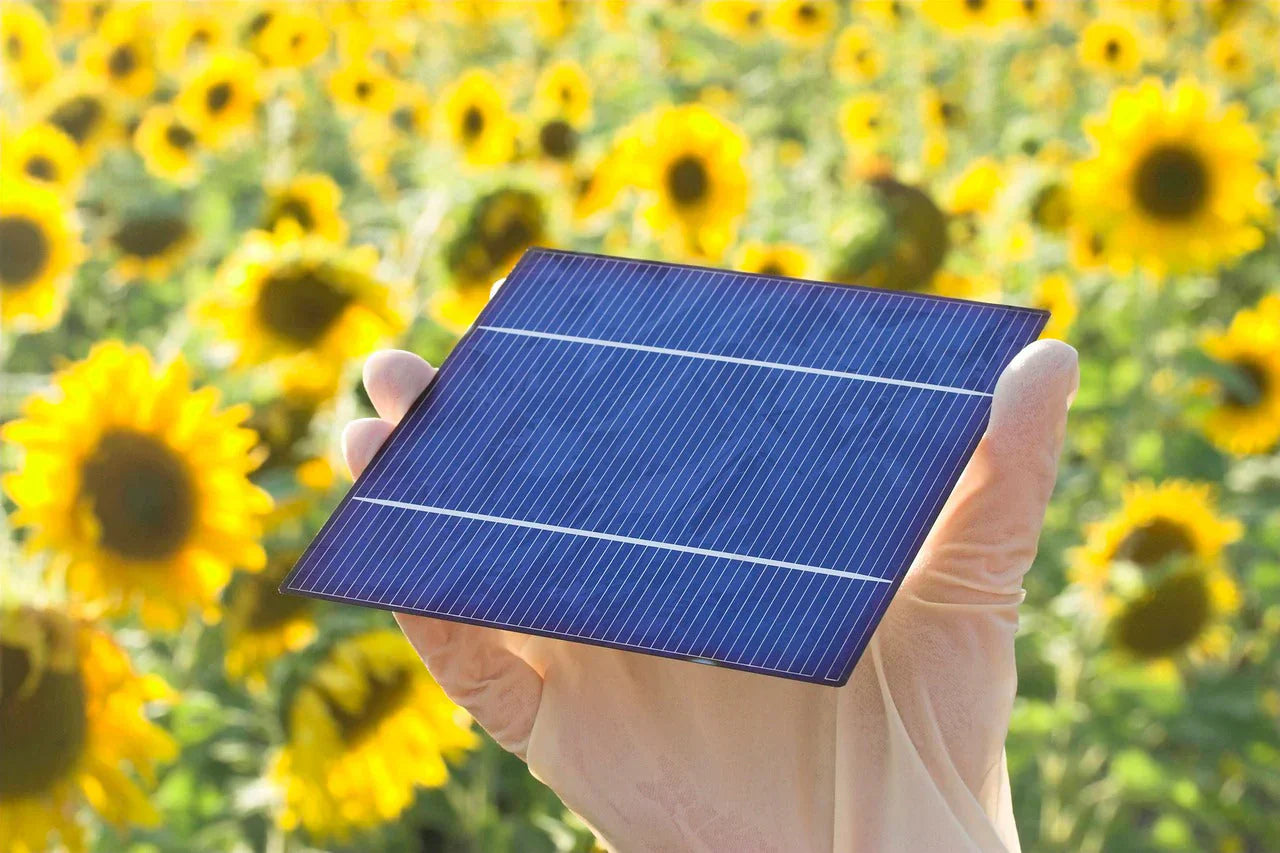
The basis of everything is photovoltaic panels. Solar radiation falling on their surface generates a direct voltage through a principle called the "photoelectric effect" invented by none other than Albert Einstein. Individual cells are made of silicon crystals and if photons of the appropriate wavelength fall on them, they can release electrons from the silicon atoms, which become free and flow as an electric current. However, a single cell has a low voltage, so there are many of them on the panels to create a usable voltage of 40 to 50V. Silicon itself is very fragile and therefore the cells are laminated between two durable glass panes, framed in aluminum profiles to make them easier to install and transport.

What if I'm not using the energy from the panels? A photovoltaic panel behaves like any other electrical source, so when you're not using energy from it, nothing happens, it simply sits idle. This is a big difference from solar hot water systems, where the system needs to be constantly cooled.
What is a string? The voltage of a single panel is small, 40-50V, so several panels are connected in series, adding their voltages to get them within the range specified by the inverter input. Such a series connection of panels is called a string.
Can the panels be walked on? The panels have durable glass on the surface and if installed correctly so that they don't bend under pressure, they will carry you without any problems.
What are bifacial panels? They have the same transparent glass on the bottom instead of a plastic plate as on the top, so they are able to receive sunlight from the bottom as well. Their use on ground systems, as a roof for gazebos or as a fence filling is very advantageous. On a classic roof, the difference compared to classic panels is negligible.
What are half-cut panels? They use cells cut in half, which means the panel contains twice as many cells, which are connected in three parallel branches. This design allows for better performance in partially shaded panels and also increases the current throughput of the panel and therefore its better performance. The panels used today are almost exclusively Half-cut.

Photovoltaic inverter
An inverter is a device that converts direct current from photovoltaic panels to alternating current so that it can be used in 230V / 400V distribution systems. There are basically three types of inverters:
- On-Grid inverters - they do not have a battery, they only generate directly into the network
- Off-Grid inverters - they do not have a network connection
- Hybrid inverters - can work both on-grid and off-grid
Hybrid inverters are most often used in single-family home installations because they have the following advantages:
- Battery connection option - recharging the battery with solar energy during the day and consuming energy from the battery in the evening. We are usually not at home during the day and we have the most consumption in the morning and evening, while the production from the sun is the greatest at a time when we cannot use it well. The battery solves this problem.
- Backup option - in the event of a power outage, it is possible to power the entire house or a part of it from the battery

Where should the inverter be installed? We will resolve this issue with you after mutual consultation during the inspection. The ideal location is in a technical room, where there is at least a 1m wide strip of wall free from floor to ceiling, so that we can install the inverter and its accessories and also think about the battery in the future. The distance to the home switchboard or another place where the electricity supply is sufficiently dimensioned is also important. In some cases, it is possible to install the inverter on the facade of the house, but it must be under a stable or other roof.
Is the inverter noisy? Goodwe inverters have purely passive cooling, they do not have a fan, so they do not generate any disturbing noises.
DC and AC switchboards
Photovoltaic panels on the roof are a potential target for lightning during storms, so it is necessary to protect the inverter and household appliances from surges. A fuse disconnector and surge protector are installed in the DC distribution board between the panels and the inverter, and circuit breakers and additional surge protectors are installed between the inverter and the electrical network in the house.
Another important part of the installation is grounding, the purpose of which is to ensure that any lightning energy is conducted to the ground outside the house's electrical installation, which is why we install a separate terminal block that is separately grounded.

Where will the switchboards be installed? They will be near the inverter, we prefer a uniform solution for each installation, thereby striving for a certain cultural design and preventing improvisation during installation.
Smart meter
It is an electricity meter that is installed at the entrance to the house so that the inverter has information about the flow rates, how much energy flows into / out of the house. In the case of flow rate limitations, the inverter can only generate as much energy as the current consumption of the house based on this information. In the case that the flow rates are allowed, the information serves as information for the user and creates great added value.

I don't have a place in my home's distribution board to put it? If the smart meter cannot be placed on the main supply in the house's distribution board, it is possible to place it in a waterproof box on the fence next to the electricity meter and use a radio module to communicate with the inverter.
So how does it all work?
The photovoltaic inverter is phased with the grid and converts the DC current from the strings to AC and mixes it into the grid. If the household is currently consuming 5kW and the inverter is generating 10kW, 5kW will be used for household consumption and the remaining 5kW will flow out to the grid (to the virtual battery). If the sun is obscured by a cloud and the inverter output drops to 2kW, 3kW will immediately start flowing from the grid to cover the house's consumption. This whole process happens dynamically.
In the case of a hybrid system with a battery, any flow is first used to recharge the battery and then released into the grid. If the photovoltaic output drops, the house's consumption is powered by the battery until it is discharged.

Surpluses
Energy transferred to the grid is always only half the savings, because even with a virtual battery you still have to pay distribution fees and they make up 50-60% of the final price. That is why at Antik our greatest effort is to use the energy produced from the sun directly on site, and so we develop our own devices for you designed for:
- Water heating from surpluses
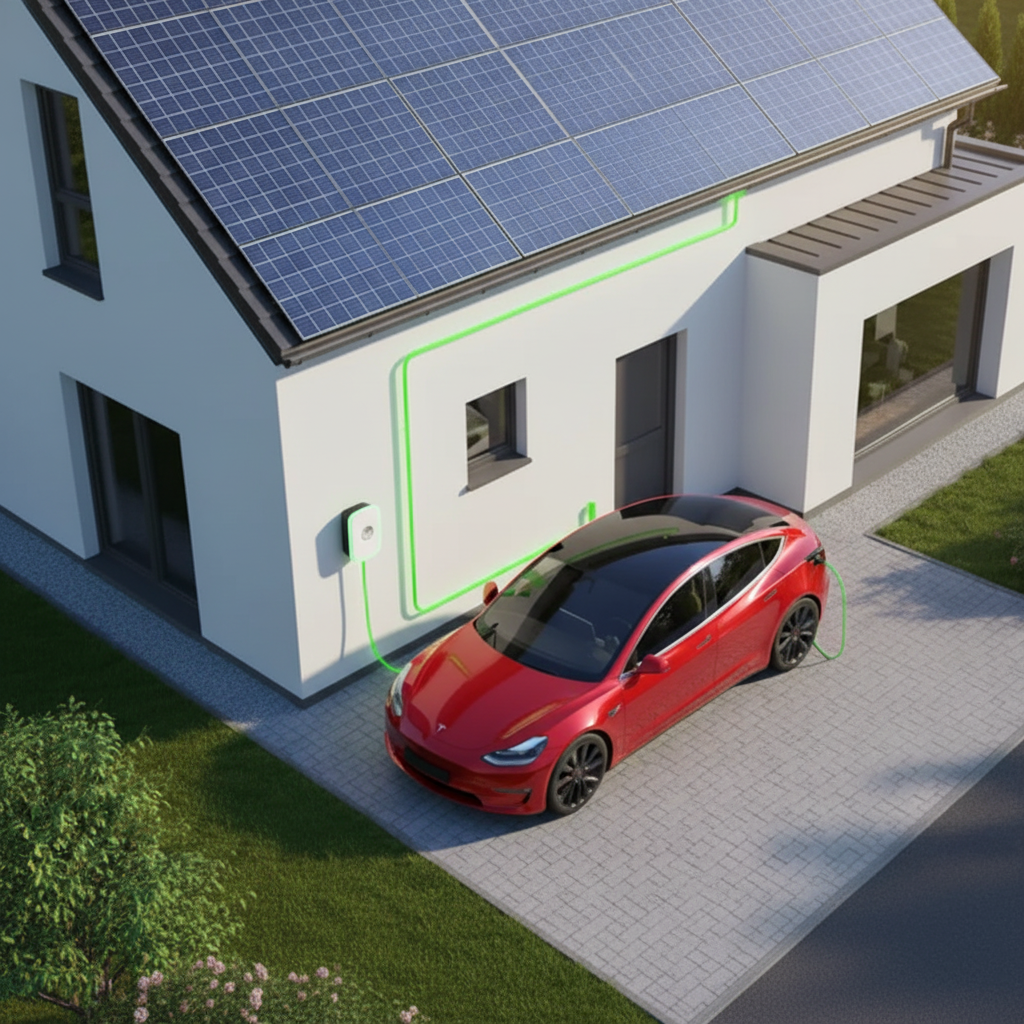
- Charging electric cars from surplus energy
- Controlling appliances during energy production
- Community energy sharing from photovoltaics
- Heat pump control based on photovoltaics
- Photovoltaic air conditioning control